My Role in the System
I developed the interaction structure and planning workflow for translating real-world site conditions into organized project direction.
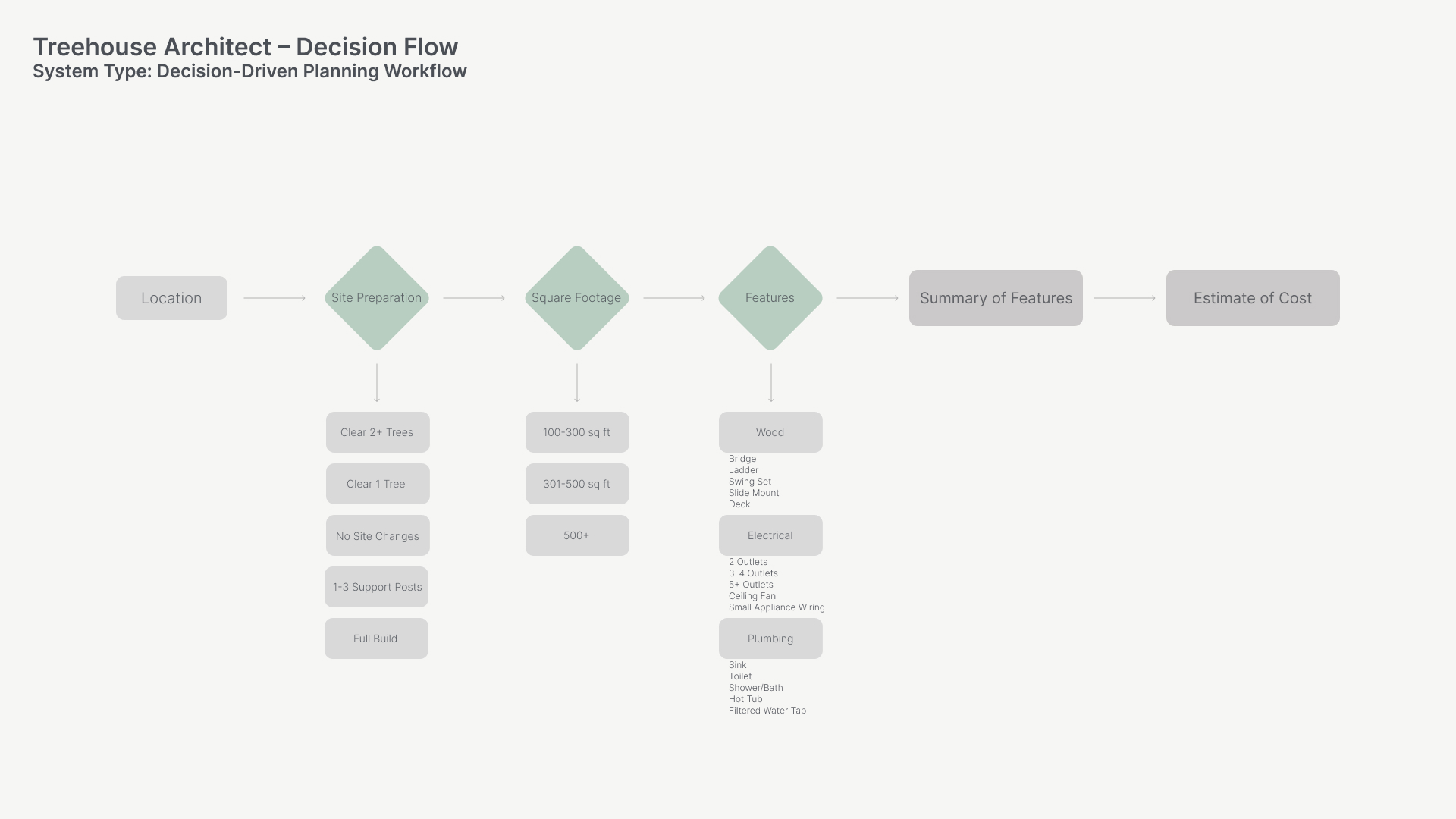
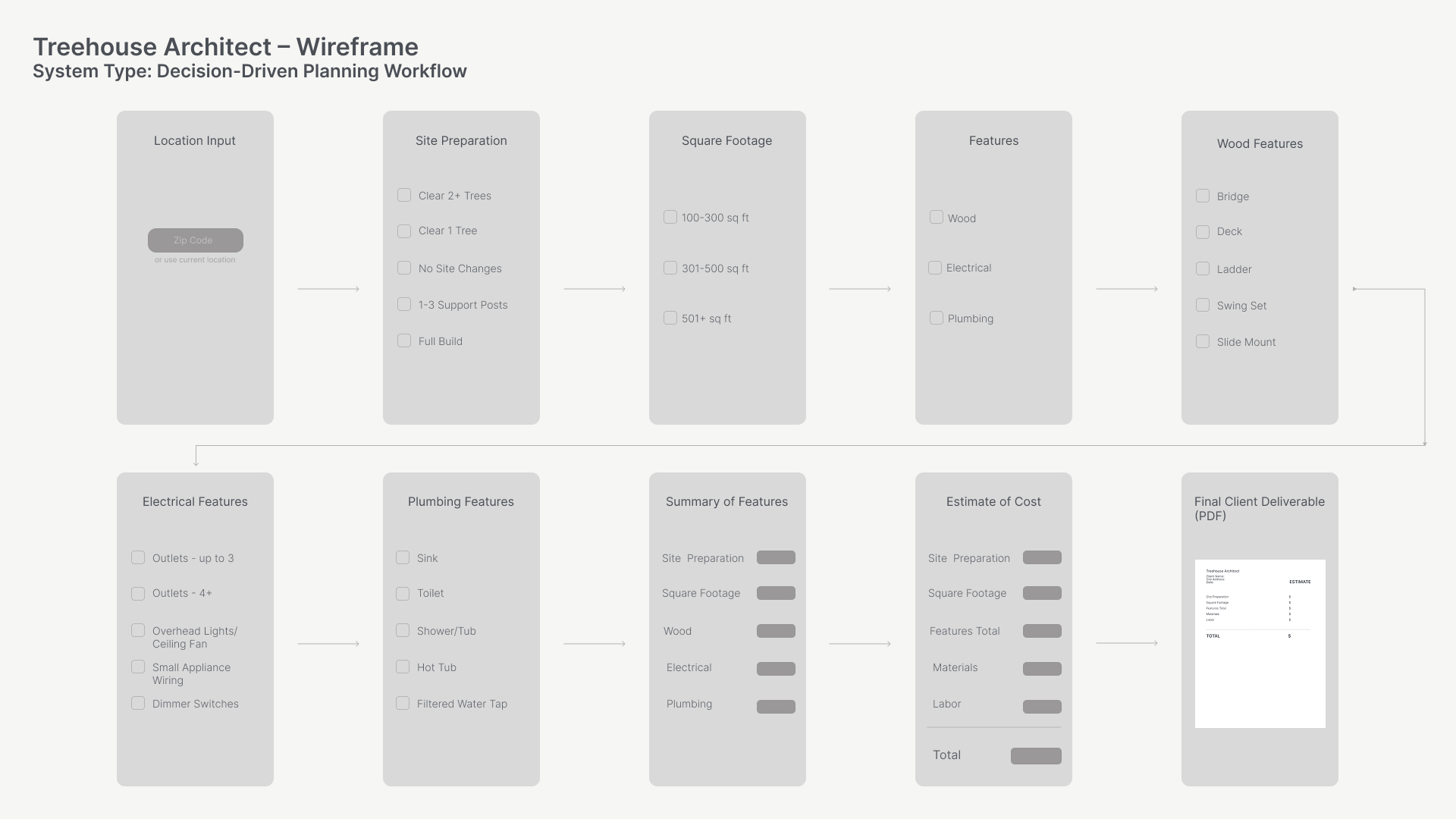
Environmental variables, build constraints, and client preferences are organized into a guided sequence that shapes early project direction and generates a shareable project estimate.
System Overview
Treehouse Architect organizes on-site consultations through a guided planning workflow. Builders input real-world conditions such as tree density, required clearing, utilities, and desired features, while translating those inputs into organized planning outcomes.
Rather than relying on ad hoc discussion, the workflow maintains a clear planning sequence.
Approach
The workflow uses progressive decision-making, where each input refines available outcomes. Environmental conditions, structural constraints, and feature selections are integrated into a guided workflow that reduces ambiguity during early planning.
The interface supports real-time use in the field while balancing clarity, speed, and adaptability, ultimately generating a shareable estimate for the client.